"Can AI heal us? – Conference replay
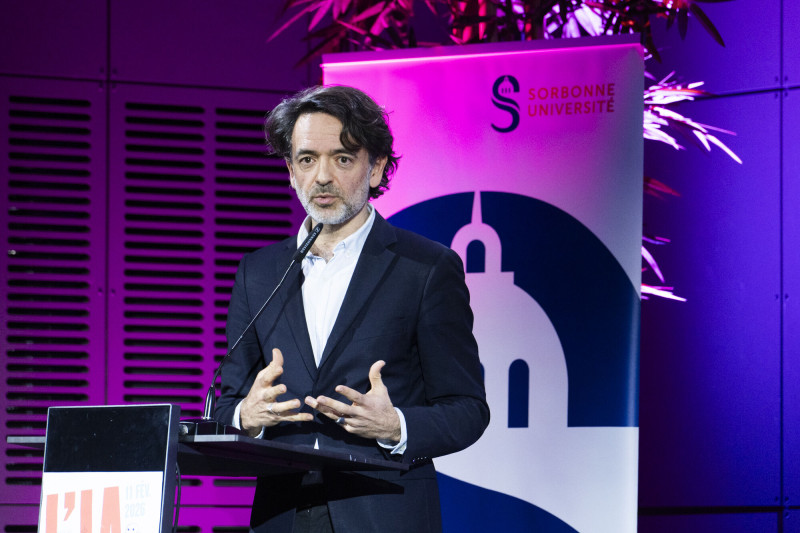
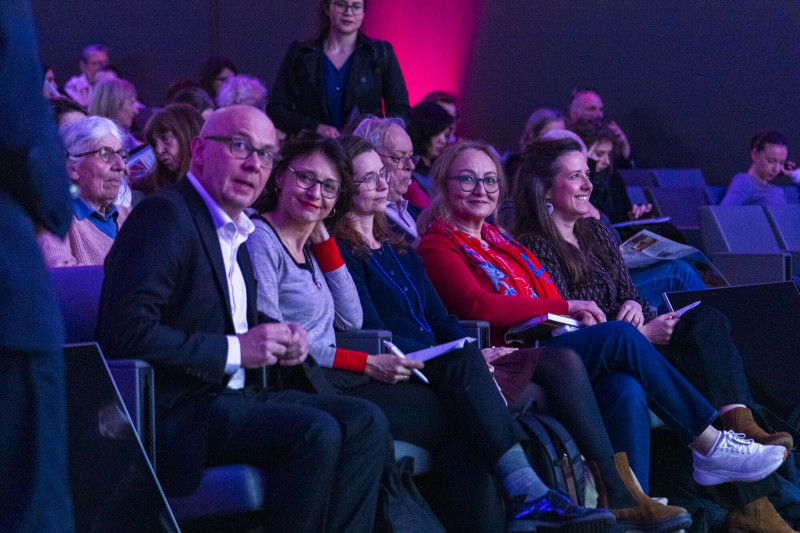
On February 11, 2026, the Auditorium at the Pierre and Marie Curie campus was sold out. Organized in partnership with Le 1 Hebdo, the conference 'Can AI heal us?' brought together researchers, clinicians, entrepreneurs, students, and the general public to discuss a question that is scientific, medical, and deeply societal. Two hours of debate explored the promises of artificial intelligence in healthcare, avoiding both naive enthusiasm and systematic distrust.
Panel Discussion: Can AI heal us? Watch the replay
Presentation
Artificial intelligence is already profoundly transforming the healthcare sector. From prevention to diagnosis, and clinical research to personalized care, its promises are vast. Yet, these advancements also raise many questions: can AI truly heal us?
This conference followed the release of the special issue "Can AI heal us?", the fourth edition of Le 1 Hebdo produced in partnership with Sorbonne University. During this event, moderated by Le 1 Hebdo journalist Manon Paulic, speakers from Sorbonne University and the Sorbonne University Alliance shared their insights on the scientific, medical, and societal challenges of AI in health.
Featured experts at this conference:
- Hakima Berdouz, engineer and founder of Hope Valley AI;
- Serge Picaud, Director of the Institut de la Vision (Sorbonne University / Inserm / CNRS);
- Gérard Biau, Professor of Statistics at Sorbonne University, Director of the Sorbonne Center for Artificial Intelligence (SCAI), and member of the French Academy of Sciences;
- Christel Gérardin, Assistant Clinical Head in Professor Steichen’s Internal Medicine department, PhD in Medical Informatics, and member of Limics (Health Informatics Research Laboratory, Sorbonne University);
- Maria Melchior, epidemiologist, Research Director at Inserm, and Deputy Director of the Pierre Louis Institute of Epidemiology and Public Health (IPLESP – Sorbonne University), member of the Sorbonne University Alliance Global Health Institute (ASU-GHI).
Conference Highlights
In his opening remarks, Pierre-Marie Chauvin, Vice-President of Science, Culture, and Society at Sorbonne University, warned against two potential pitfalls: "the great illusion" of machines automatically replacing humans, and "the great confusion" of speaking about AI in the singular, when in fact a plurality of AIs exists. This call for nuance set the tone for the entire evening.
Concrete Promises in Medicine
Led by journalist Manon Paulic, the panelists first provided an overview of current AI applications in healthcare. From massive medical data processing to diagnostic assistance, including image analysis and personalized care pathways, the applications are already numerous.
Gérard Biau, Professor of Statistics and Director of the Sorbonne Center for Artificial Intelligence (SCAI), traced the evolution of AI from an early ambition of symbolic intelligence to learning based on data and neural networks. These models learn from examples and generalize to new situations, whether involving images or text. In healthcare, this capability makes it possible to identify correlations invisible to the human eye, improve diagnostic accuracy, or anticipate certain risks. However, Gérard Biau asserted that the machine must not replace "the physician's expertise and judgment."
On the clinical side, Christel Gérardin, Internal Medicine Physician and PhD in Medical Informatics, highlighted the value of these tools in supporting practitioners within a hospital environment marked by time pressure and increasingly complex patient management. Using the AP-HP (Paris Public Hospitals) health data warehouse, she is developing tools capable of identifying patients with similar profiles to refine decisions, as well as systems for the automatic summarization of medical records to assist clinicians in emergencies. In her view, it is essential to "start from the field and move toward AI, rather than starting from AI and moving toward the field."
Serge Picaud, Director of the Institut de la Vision, demonstrated how much AI already permeates ophthalmology, from diagnosis to therapy. According to him, it improves image analysis to the point of detecting signatures associated with certain pathologies, such as Alzheimer's, from a fundus examination (retinal imaging). It also contributes to modeling visual circuits, optimizing vectors in gene therapy, and accelerating molecule screening. AI is a lever for better understanding vision and preventing disease progression, as well as developing innovative visual restoration strategies.
From Data to the Individual: A Central Ethical Challenge
Beyond technical performance, the discussions also addressed the ethical and social questions raised by the use of AI in medicine. Maria Melchior, epidemiologist and Deputy Director of the Pierre Louis Institute of Epidemiology and Public Health, pointed out that in the field of mental health, AI could help analyze complex data to better understand individual risk trajectories and protective factors. However, she also emphasized that the quality of models depends directly on the quality of the data. Medical databases can reflect social or regional biases which, if poorly managed, risk being reproduced or even amplified by algorithms. She also reminded the audience that "if the rollout of innovations is not properly supported, they will widen health inequalities."
Hakima Berdouz, engineer and founder of Hope Valley AI, provided the perspective of healthcare entrepreneurship. She stressed the need to build tools in close collaboration with professionals and patients to avoid a "technology-first" approach disconnected from real-world usage. "Before innovating technologically, we must understand the problem," she noted. Innovation can only be relevant if it is integrated into existing practices and addresses identified needs.
Redefining the Role of Caregivers
For all the panelists, AI does not heal alone; it operates within an ecosystem where human relationships remain central. Medicine cannot be reduced to data analysis; it involves a relational dimension, active listening, and a capacity for contextualized interpretation that machines cannot replicate. As Gérard Biau reminded the audience, the challenge is not substitution, but rather the complementarity of the machine.
In this perspective, AI appears as a tool capable of augmenting certain abilities—such as information processing and the detection of complex patterns—while leaving the responsibility of interpretation and the final decision to the healthcare provider. This transformation of practices requires training, support, and collective reflection.
A Cross-Disciplinary Reflection
Throughout the roundtable, the discussions showed that the question of AI in healthcare cannot be approached solely from a technical angle. It involves issues of data governance, equitable access to care, legal liability, and trust. This plurality of approaches reflects the multidisciplinary identity of Sorbonne University, where health plays a major role alongside science, engineering, and the humanities and social sciences.